
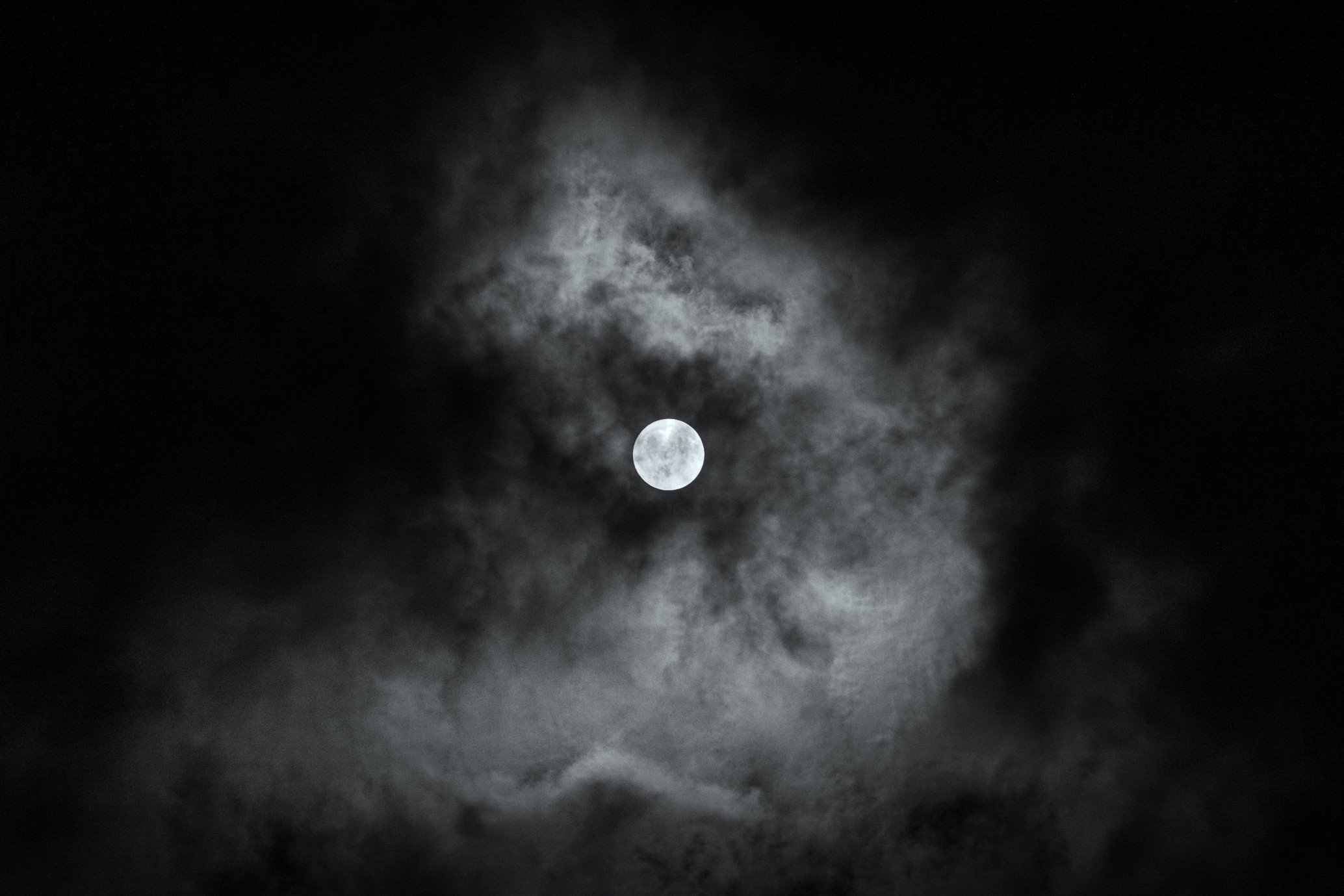
November’s moon is known as the Darkest Depths Moon or gealach doimhneachd dorcha. In ancient Celtic cultures, the oncoming darkest days of the year, shortening hours of sunlight and stormier weather, brought with it a sense of homeliness, new potential and growth, often expressed in indoor crafts, cooking and baking. The home fire or hearth became the focus of attention, with homemaking tasks like tallow curing, candle making, stacking smoke bundles ready to purify the air and creating herbal teas from autumn-dried leaves and seeds. Rather than fearing the darkness, in Celtic cultures time was spent in preparing to ‘enjoy’ the lengthening nights by the fireside together.
November’s full moon falls this year on 24th and is best viewed on the eastern horizon just after early sunset. This year, the November full moon is a super-moon, which means it coincides with a time when the moon in its orbit is at its closest to the earth making it seem bigger and brighter than usual. This moon can also be known as the beaver moon, as in nature this time of year, beavers would be preparing for winter, building dams and stocking up their food. Other mammals and birds are also getting ready for the colder months. Noctural species begin to prepare burrows and nest places for hibernation. Owls and large birds of prey can be heard hunting and roosting.
The night sky brings us many joys this time of year, even if the weather for stargazing is not always as pleasant as we would like. The later you can go out the better, as often the sky clears to give us some cold, frosty mornings later on. These skies are perfect for meteor shower watching and our Taurids (late evening peak is November 11-12th) and Leonids (after midnight peak is November 17-18th), though slower in activity each hour, give us plenty of opportunities to spot some proper fireballs.
Build a Hedgehog House Look After Our Bats